
Textiles from
plastic waste
A Nuanced Perspective on Recycled Polyester
Recycled polyester, most often produced from used plastic bottles (PET), is increasingly utilised in textiles. Meanwhile, the material is a subject for ongoing debate.
Questions are raised about whether this practice disrupts well-functioning bottle-to-bottle recycling systems, and whether it can serve as a convenient justification for inaction in other areas, for both companies and consumers.
RESPECTING THE LOOP
PET bottles are easy to recycle back into new PET bottles. For that reason, some argue they ought to stay in their own loop to avoid downcycling. Downcycling happens when a material is recycled into something of lesser value than its original use.
For example, when textile producers transform PET into clothes, curtains, or stuffed animals, it exits the bottle-to-bottle loop. Instead, the material often enters its final lifecycle, since large-scale recycling of polyester textiles currently aren’t widely available. Furthermore, polyester is often mixed with other materials, making the recycling process more complex and less economically viable.
At Kurage, we acknowledge this complexity. And we most certainly agree that plastic bottles should not be diverted from closed and well-functioning recycling loops. We believe it is important to approach recycled polyester with transparency and nuance, rather than framing it as either a perfect solution or a destructive invention. When really, it’s neither.
Recycling is an essential step on our way towards a more circular economy, but it cannot be the only solution.


GIVING NEW LIFE TO PLASTIC WASTE
Nevertheless, the plastic pollution crisis is real too. Using resources that have already been in use, and that might otherwise end up in a landfill, an incinerator, or even in nature, can reduce the need for virgin materials.
Today, 13 out of 14 of Kurage’s polyester collections are made from 99-100% recycled polyester and the textiles are GRS certified (Global Recycled Standard). We work closely with suppliers and sub-suppliers ensuring traceability, strong relations, and trustworthiness.
OCEAN PLASTIC VS. LAND-BASED PLASTIC WASTE
Ocean Plastic vs. Land-based Plastic Waste
Ocean plastic and ocean-bound plastic are both used more and more as sources for recycled polyester. Ocean plastic is collected directly from the sea, while ocean-bound plastic is recovered typically from coastal areas within 50 kilometres of the shoreline, where the risk of marine pollution is high.
Not all plastic types are suitable for textile production, though. Polyester is made from PET plastic which is the same material used in most beverage bottles and certain food packaging. Other plastics, such as those used in bags, films, or fishing nets, require different recycling processes and are converted into different textile fibres such as polyamide and nylon.
As a result, a significant share of the plastic used for recycled polyester, including ocean-bound sources, is likely to be based on PET materials.
At the same time, the value chain differs depending on the end use. PET recycled into textiles can carry a higher market value than when used for new bottles. This can create economic incentives to collect plastic waste from coastal areas and nature, supporting clean-up efforts where infrastructure is limited.
This illustrates the complexity of material flows in a circular system. Recycled polyester, whether made from ocean-bound plastic or land-based plastic waste, can contribute to reducing environmental pollution, even though the material might end its life here. As with recycled polyester more broadly, the impact depends on how and where materials are sourced, transported, processed, and used.
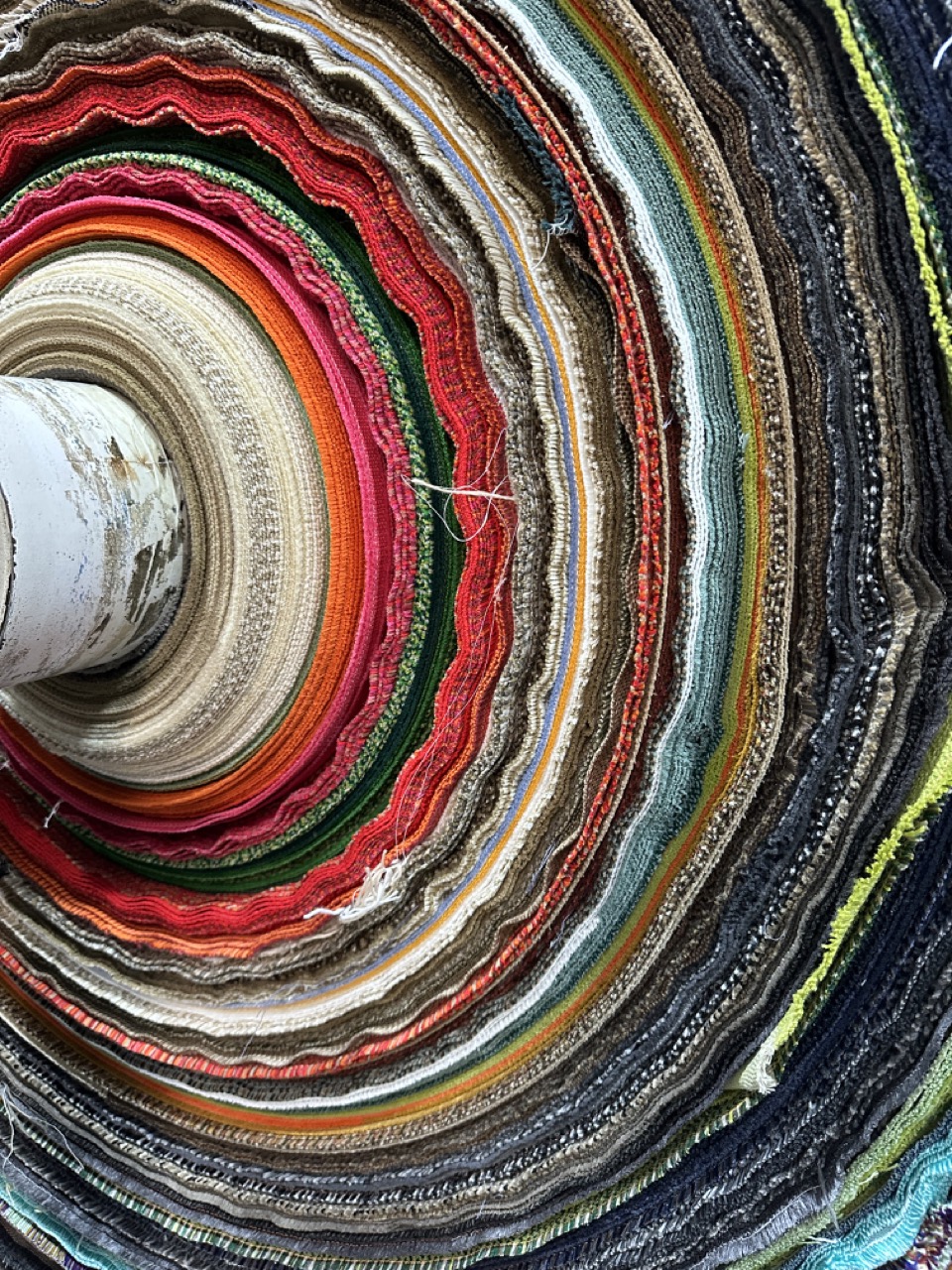
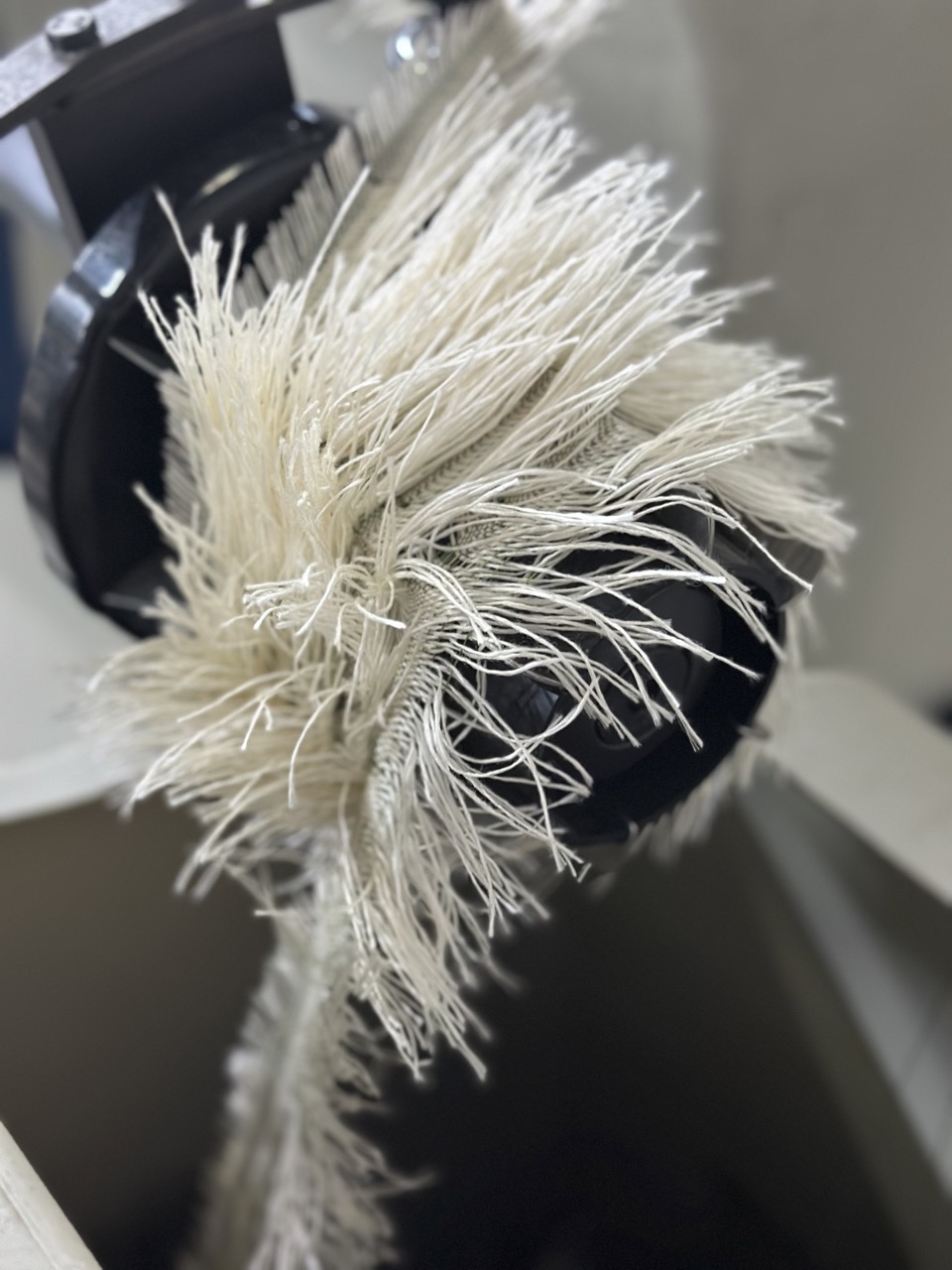
PURE MATERIALS AND STRICT STANDARDS
We are conscious of the challenges linked to material choices. In many of the environments where our products are used, such as public buildings and commercial spaces, flame retardancy is a non-negotiable requirement. This limits the immediate applicability of natural fibres, which often require additional treatment to meet safety standards.
Most of our textiles are made from a single fibre type. We believe this may simplify future recycling processes compared with textiles made from blended fibres. However, textile-to-textile recycling depends on available collection, sorting, and recycling infrastructure.
CIRCULARITY IN MIND
For us, recycled polyester is not a final answer, but a considered choice within the reality of our industry. We continuously explore alternative materials and innovations that can further improve the environmental profile of our products, and we remain committed to increasing transparency and supporting more circular solutions as they evolve.
Lastly, our textiles are not part of a fast-moving consumption cycle. Our fabrics are designed for use in public and commercial interiors, where durability and long service life are important performance requirements. With the right care and maintenance, curtains from Kurage will stay beautiful and functional for many years. This longevity is an important part of the overall environmental equation.
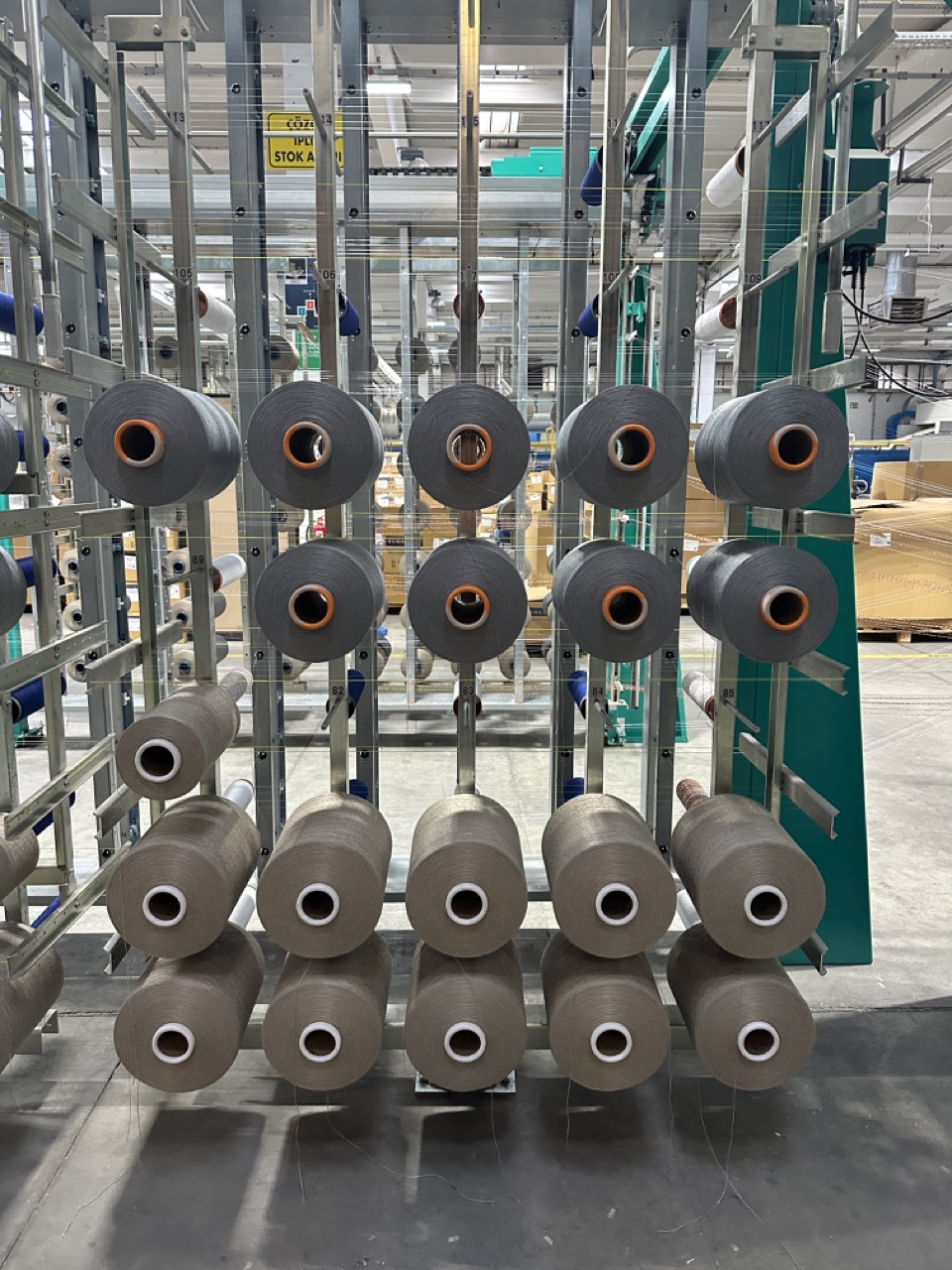
The difference between pre- and post-consumer plastic waste
At Kurage, we produce many textiles made from recycled polyester, sourced from both pre-consumer and post-consumer plastic waste.
Post-consumer plastic waste refers to materials that have already been used by consumers and then discarded. This type of waste typically comes from households and includes bottles, packaging, bags etc. It is often contaminated and contains many different plastic types and blends. Therefore, it requires extensive sorting, cleaning, and processing before it can be broken down, remelted, and recycled into new granules. Granules are the raw material for plastic products.
Pre-consumer plastic waste is generated during the production of plastic products, before they ever reach the end-user. Examples include production scrap, defective items, or excess materials. This waste is usually clean and homogeneous, meaning it is not mixed with other plastic types. As a result, it is much easier to recycle and can often be reused directly in the same production process. It is sometimes referred to as secondary raw material or new waste.
It is important not to confuse pre-consumer waste with post-industrial plastic waste. Post-industrial waste consists of plastic products that have been used in industrial processes, such as plastic pallets, containers, or films. Compared to post-consumer waste, post-industrial waste is typically more homogeneous and less contaminated, making it easier to recycle, though not as clean as pre-consumer material.
Q&A: Recycled polyester
What is recycled polyester?
Recycled polyester is a versatile textile made from used PET plastic, most commonly beverage bottles, that are downgraded into granules, melted, and spun into polyester yarns.
Is recycled polyester a sustainable material?
This question cannot be answered with a simple yes or no. Its environmental impact depends on how it’s produced, how it’s used, and whether it goes back into a recycling loop. All else being equal, recycled polyester generally has a lower climate footprint than virgin polyester at the material-production stage. The actual difference depends on the source of the recycled material, the recycling process, energy use, transport, and the boundaries of the assessment.
For commonly used recycled PET production routes, studies generally find a lower climate footprint than for virgin polyester production, when comparing equivalent material-production stages.
Sources and further reading
The statement about the climate footprint of recycled polyester is based on life-cycle studies of recycled PET and polyester production. The results depend on the recycling route, allocation method, energy use, material source, and system boundaries. The studies below do not constitute a product-specific LCA of Kurage’s textiles.
Peer-reviewed LCA, directly comparing recycled PET fibres with virgin PET fibres
Should PET bottles remain in closed loops?
Yes. Where effective bottle-to-bottle recycling systems exist, keeping PET bottles within those systems is typically the most resource-efficient solution.
How does Kurage approach these dilemmas? What is recycled polyester?
We recognise the complexity. Recycled polyester is neither a perfect solution nor inherently problematic. Rather than relying on simplified narratives, we believe in transparency and nuance. We’re doing all that we can to ensure the plastic used in our products are, in fact, waste that otherwise would’ve been incinerated or left in a landfill. All our recycled polyester fabrics are GRS-certified.
Why use recycled polyester at all?
Plastic waste is a real and urgent challenge. Depending on the material source and supply chain, using recycled polyester can contribute to keeping existing plastic materials in use and reducing the demand for virgin raw materials.
What is the difference between ocean plastic and ocean-bound plastic?
Ocean plastic is collected directly from the sea, while ocean-bound plastic is recovered near coastlines. Both can contribute to reducing pollution when responsibly sourced and processed.
Can all plastics be used to make polyester?
No. Polyester is made specifically from PET plastic, while other plastic types require different recycling processes and result in different fibres or materials.
Does recycled polyester support circularity?
It can contribute to circularity, but it’s not a complete solution on its own. True circularity depends on the entire lifecycle of the material, including design, use, collection, and recycling infrastructure.
How does Kurage work with materials?
Most of our textiles are made from a single fibre type, making them more compatible with future textile-to-textile recycling technologies.
Why not use natural fibres?
Particularly in public and commercial spaces, our applications must meet strict performance requirements, including flame retardancy. These standards limit the use of untreated natural materials.
Is recycled polyester the long-term answer?
Probably not. It’s a considered choice within current technological and regulatory constraints. We continue to explore alternatives and improvements.
How does durability factor in?
Our fabrics are designed for long-term use. Longevity is a key part of reducing overall environmental impact.