Back to stories
the art of
transformation
MEET E+N ARKITEKTUR AND ANNE KATRINE ARRILDT
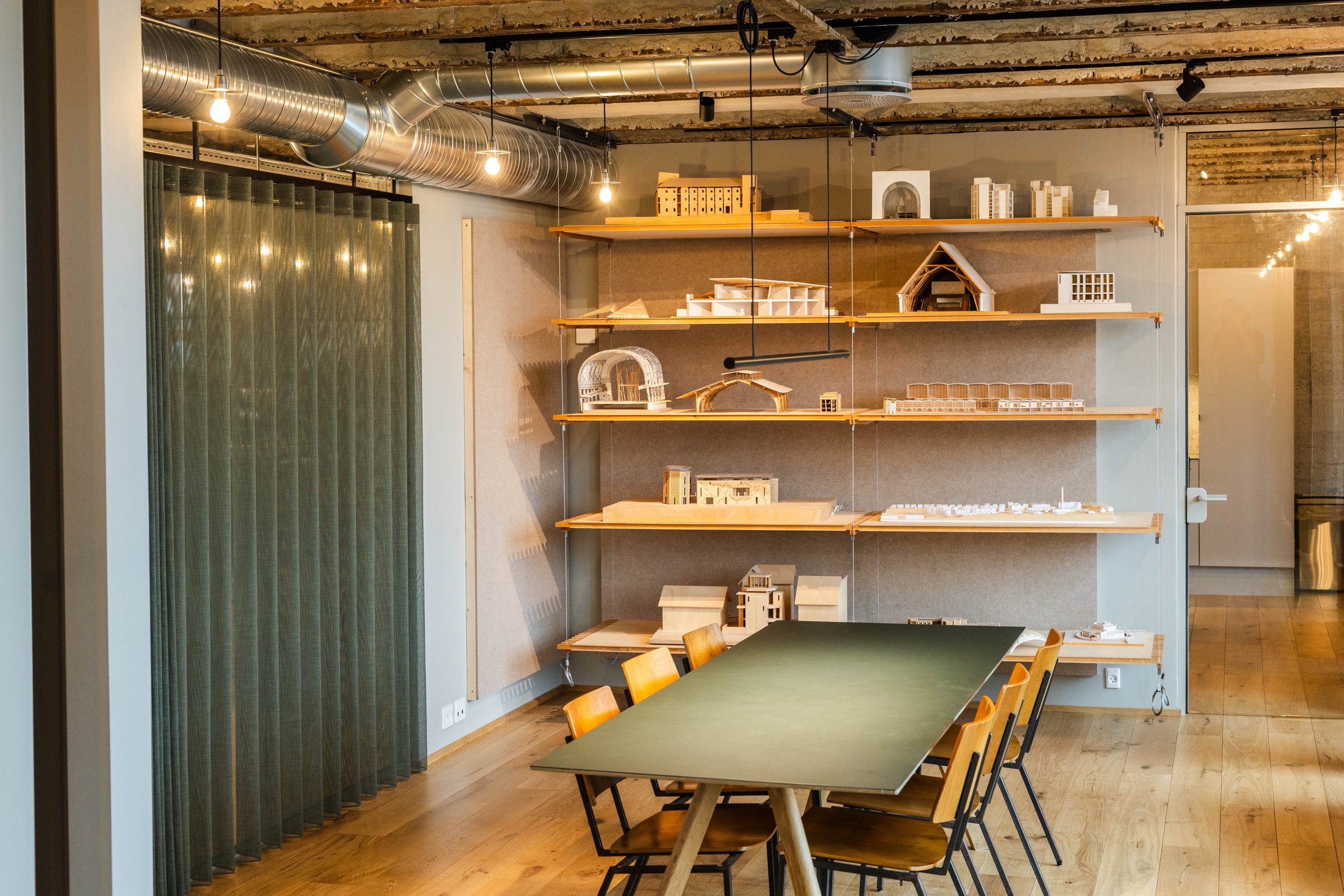
In the heart of Aarhus, E+N Architecture has transformed a 1960s concrete structure into their very own modern office. Yet, the act of transforming a building like this was not exactly an easy task. Despite its location near the city’s cathedral, it felt closed and introverted. The potential was there but buried under layers of later additions and unresolved decisions.
“We called it The Ugly Duckling. The potential was absolute, but it was unresolved in its previous constellation,” Anne Katrine Arrildt, partner at E+N, says.
For E+N, transformation is essentially about understanding the building’s history, the intentions behind it, and what narrative it should tell. It’s an art.
Anne Katrine explains their approach:
“In some projects, the right thing is to restore carefully. In others, you must be more decisive. Here, the analysis showed that we needed to go further. We try to understand what the building wants to be, and what the place needs it to become.”
This balance between restoration and transformation is central to E+N’s practice. They describe it as working between respect and reinterpretation. Buildings should be treated as living objects. Not static to change.
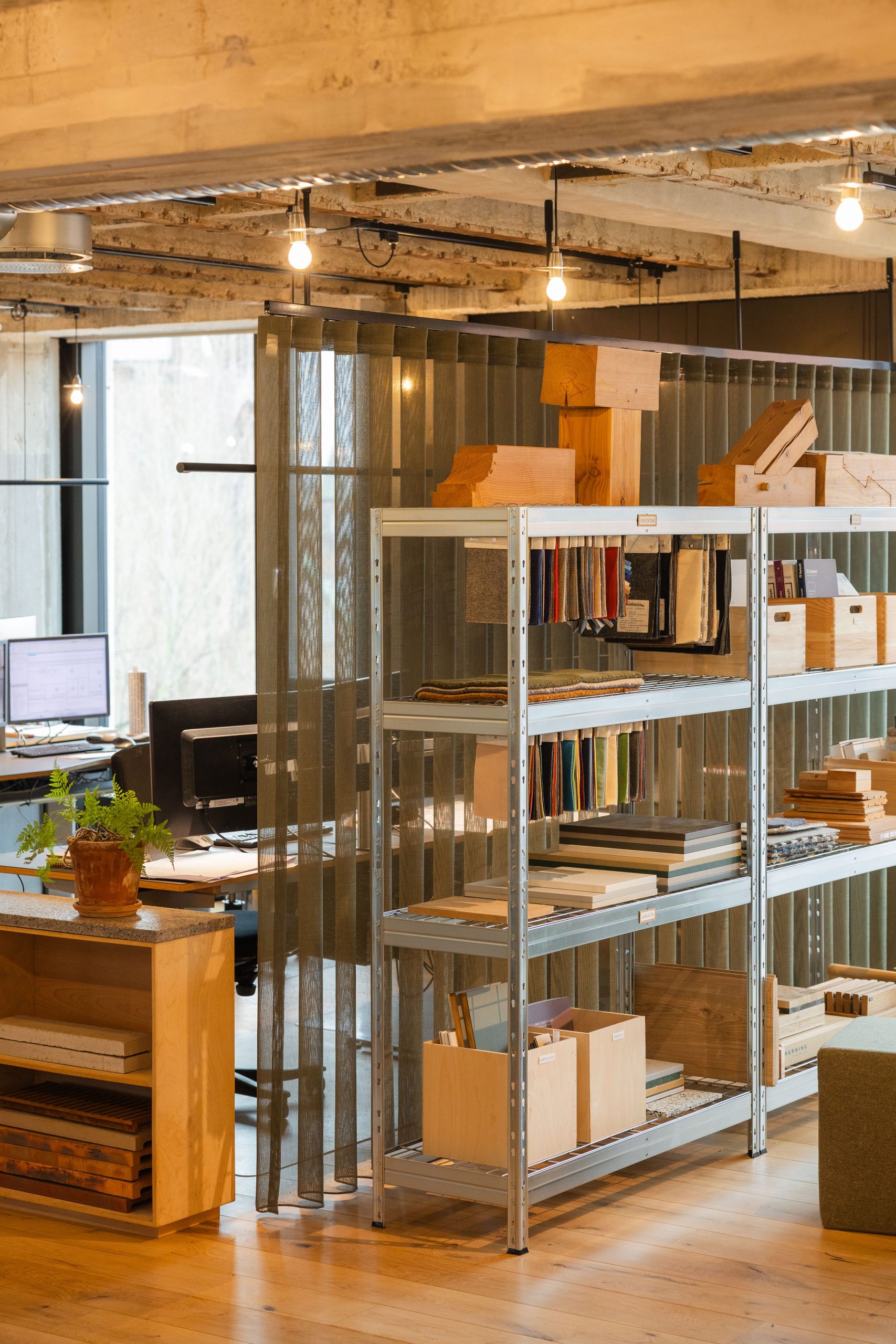
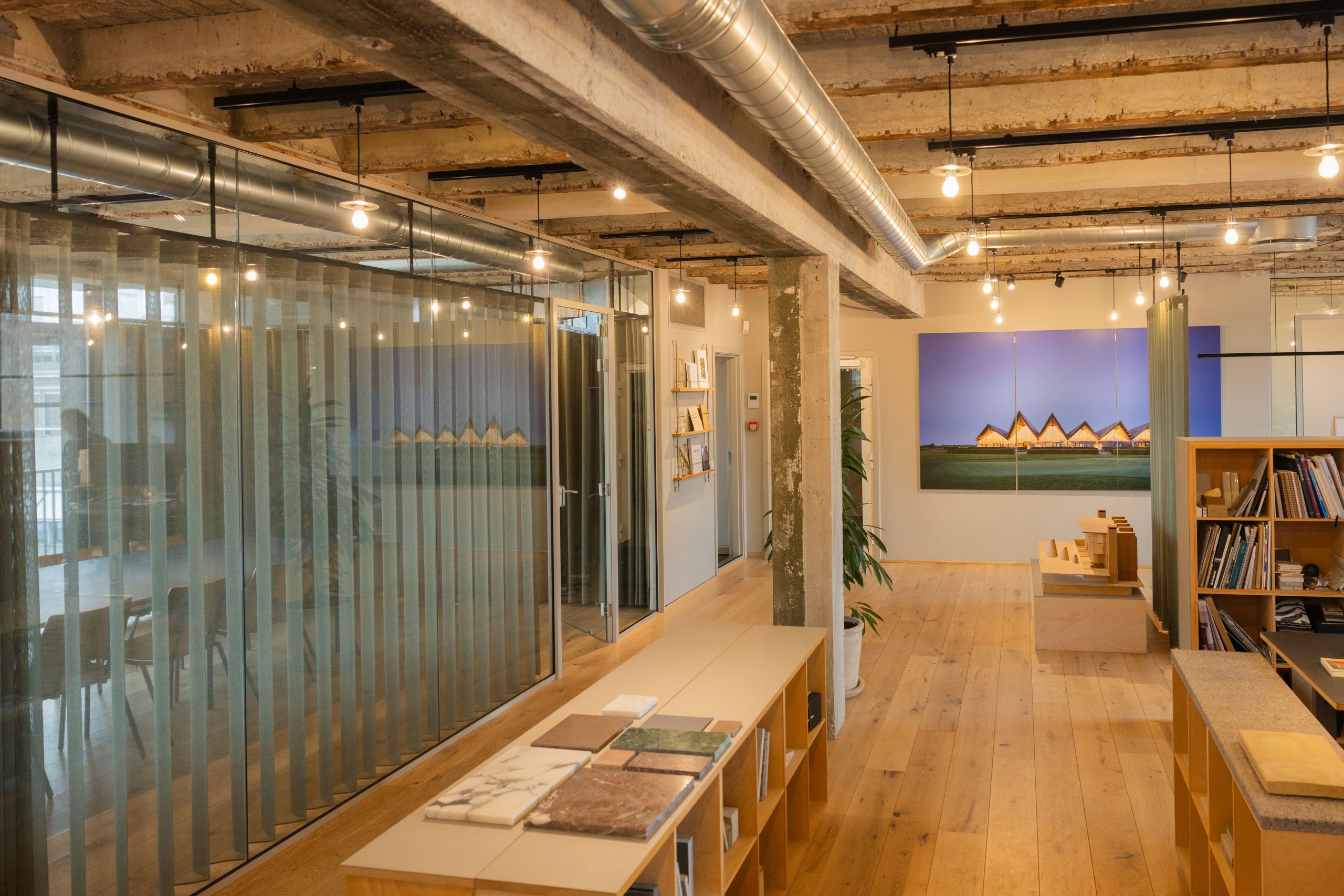
E+N’s process led them to strip the building back to its core structure. Raw concrete columns and ceilings now define the interior. Rather than covering these elements, E+N chose to highlight them and add new layers in contrast.
This is where textiles come in.
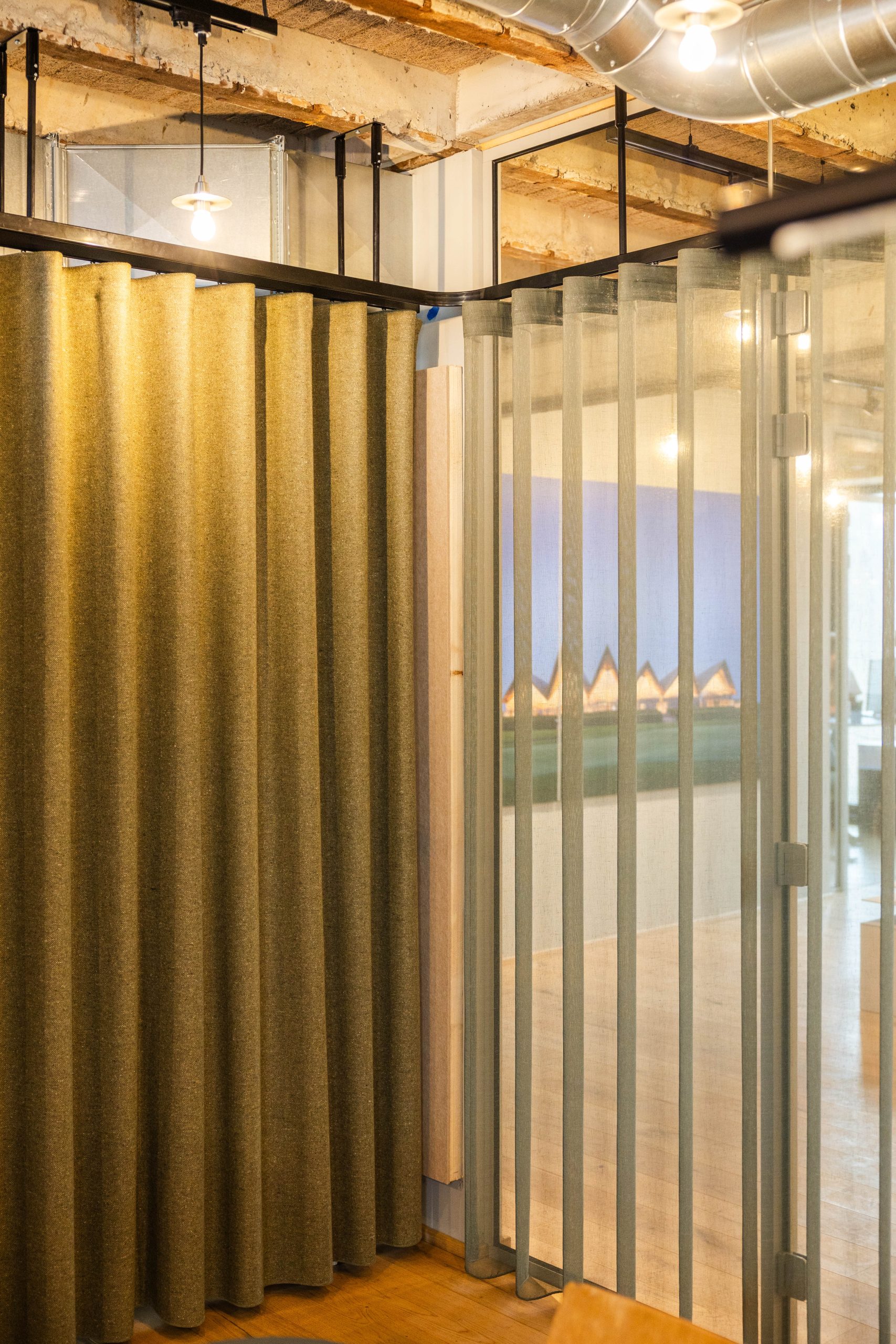
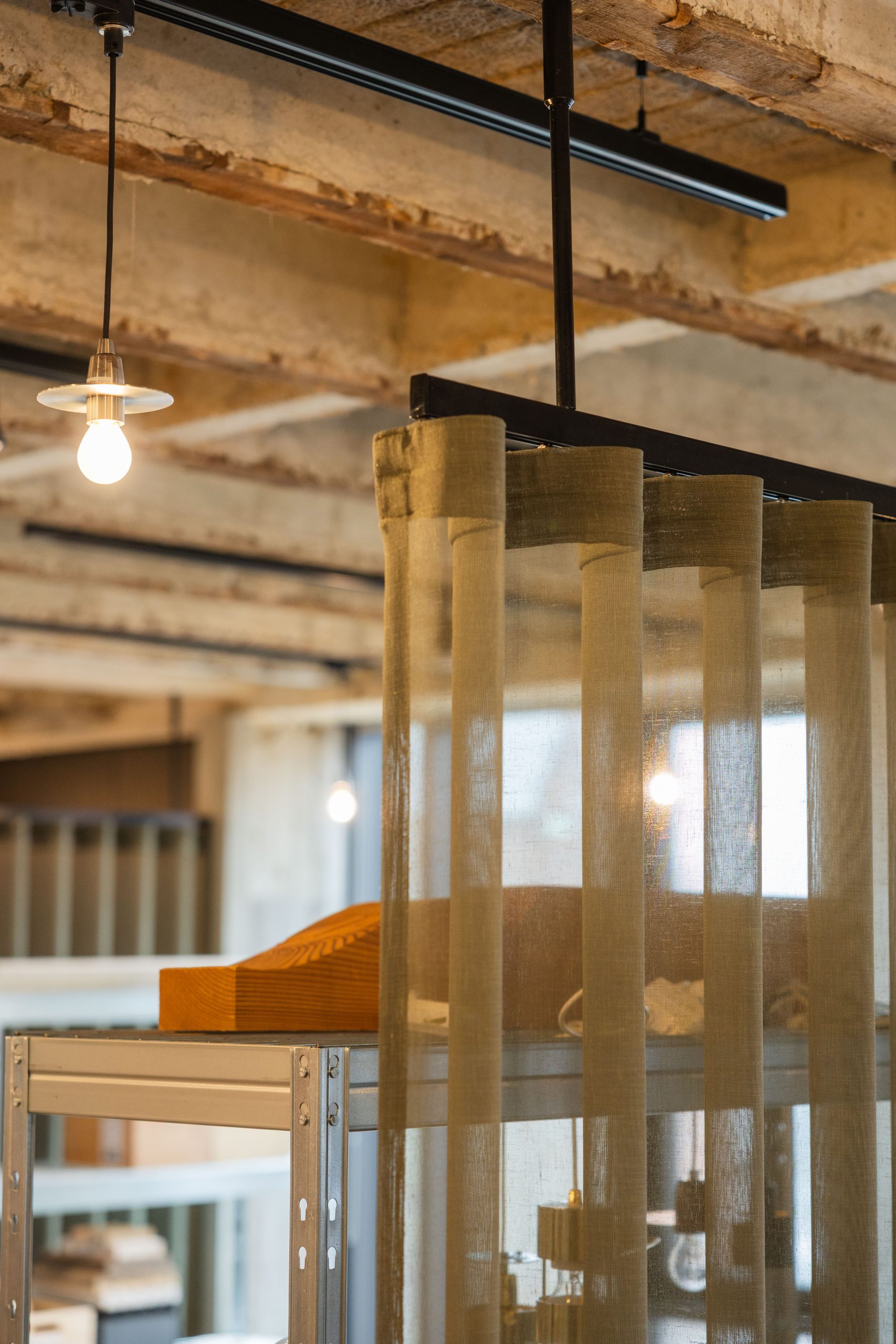
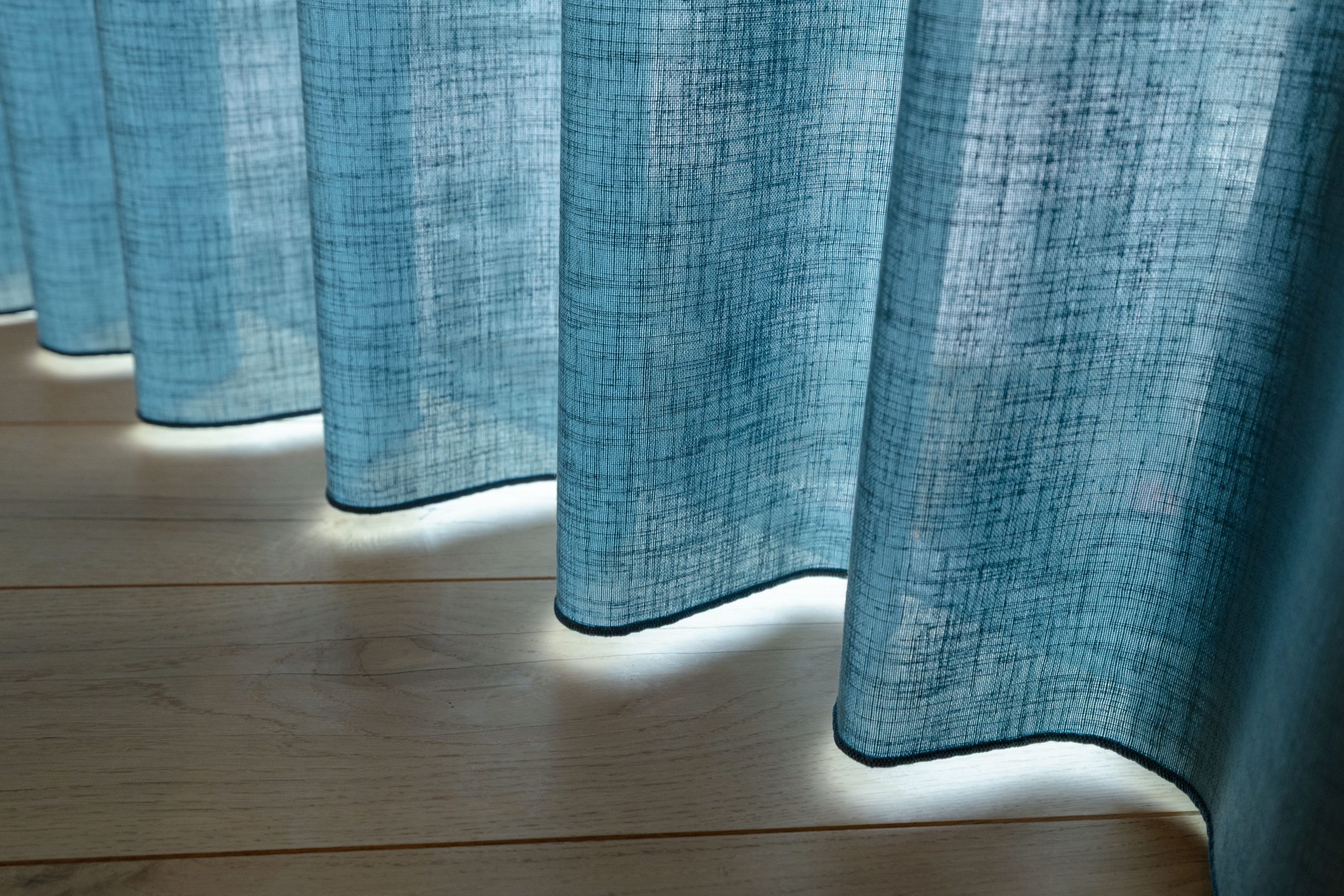
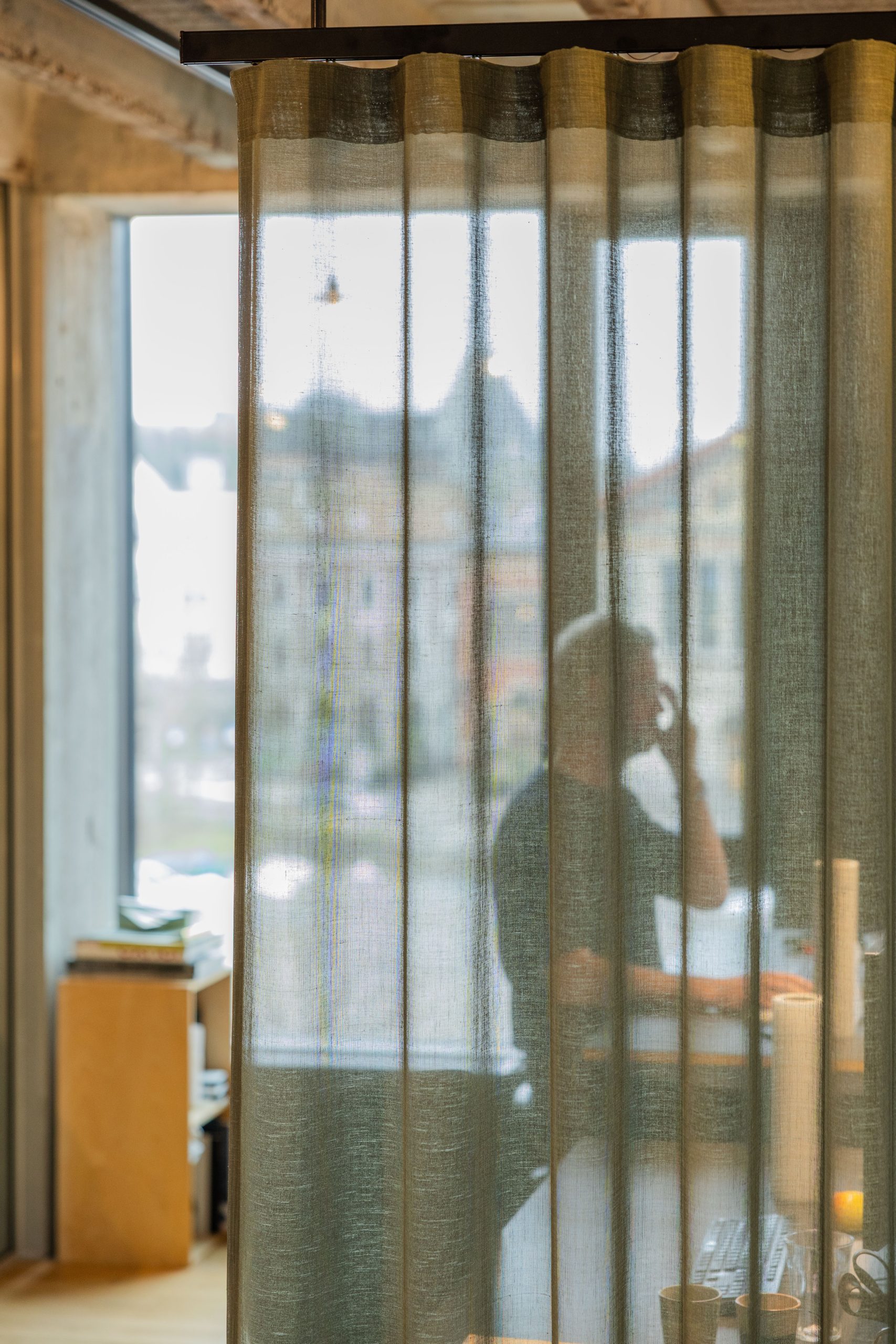
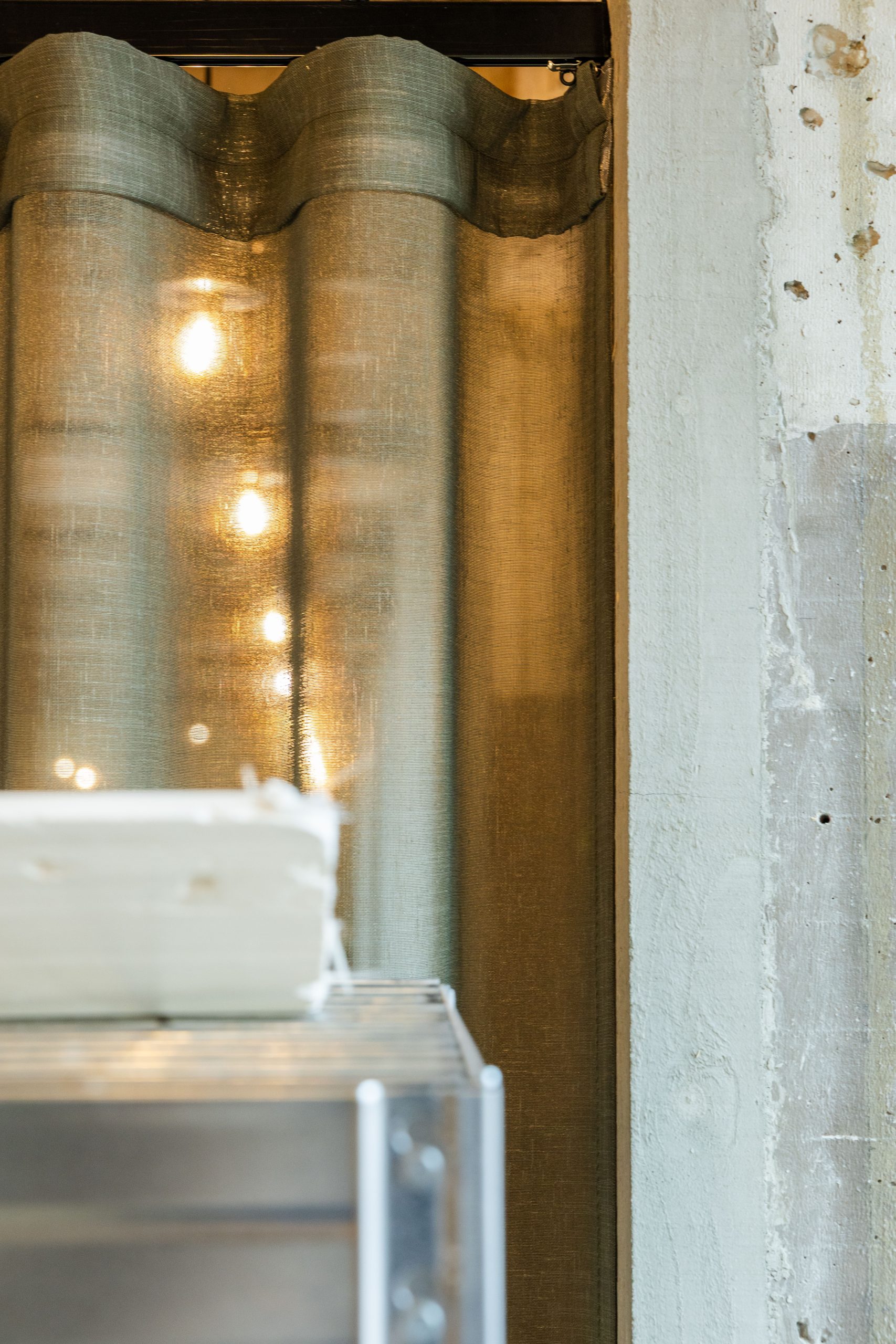
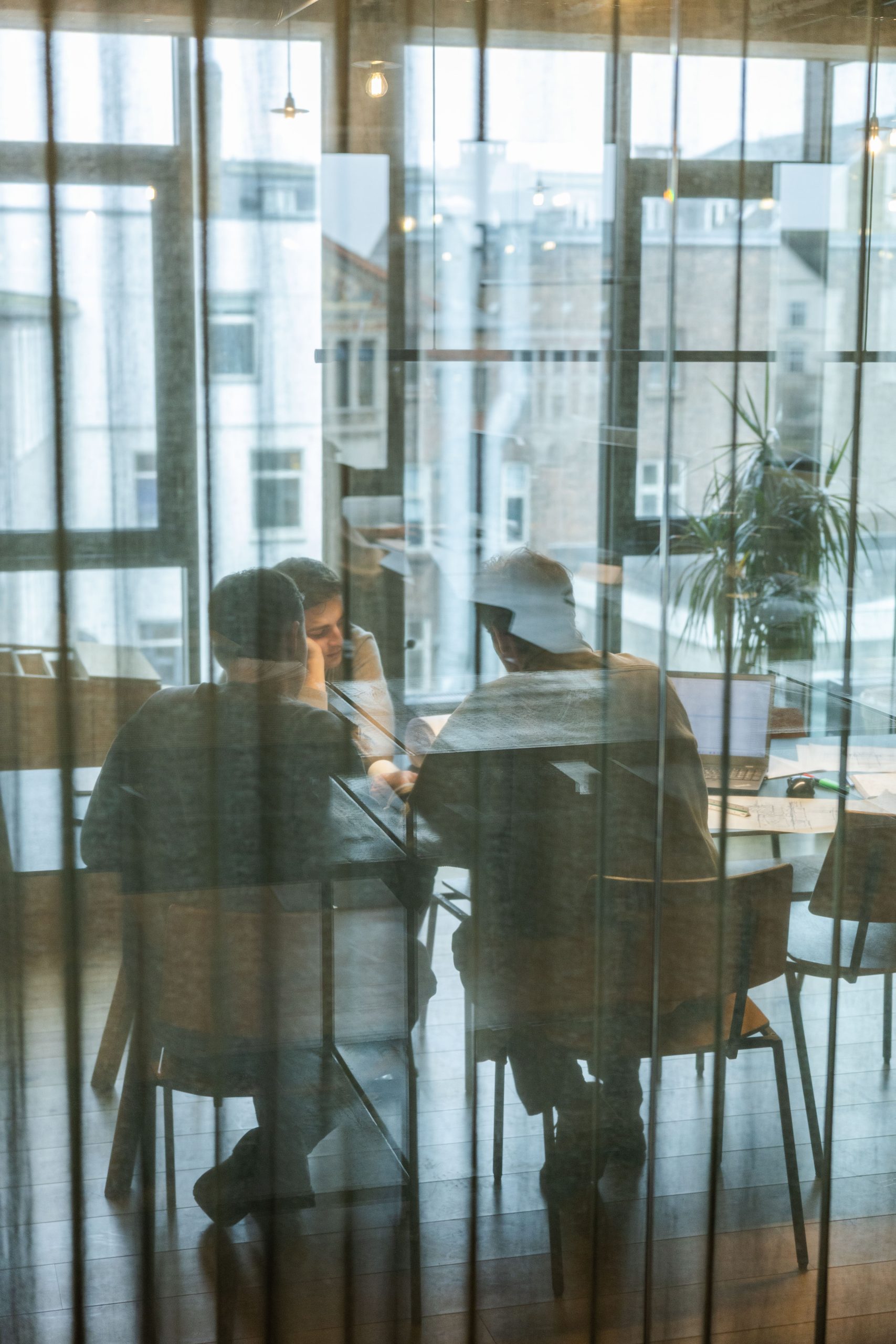
Curtains are used throughout the space as soft architectural tools. Light, semi-transparent fabrics divide the open space office into smaller zones, while heavier curtains improve acoustics and create more enclosed settings where needed.
“It creates a kind of boundary, but you can still see silhouettes through it. It’s not rejecting in that way.”
The colour palette is rooted in the building itself. During the transformation, a green tone was discovered on the original structure. They decided to translate this colour into textiles that tie the new elements back to the existing architecture.
“It’s really a colour scheme that came from exploring what was already in the building,” Anne Katrine explains.
A former “ugly duckling” that has been transformed and found its place.